Post

Visualizzazione dei post con l'etichetta ESO

First interstellar comet may be the most pristine ever found
Immagine
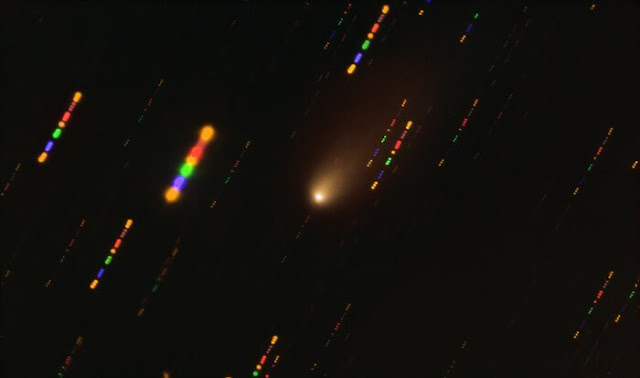
New observations with the European Southern Observatory ’s Very Large Telescope (ESO’s VLT ) indicate that the rogue comet 2I/Borisov , which is only the second and most recently detected interstellar visitor to our Solar System, is one of the most pristine ever observed.  Astronomers suspect that the comet most likely never passed close to a star, making it an undisturbed relic of the cloud of gas and dust it formed from.  This image was taken with the FORS2 instrument on ESO’s Very Large Telescope in late 2019, when comet 2I/Borisov passed near the Sun (credit: ESO/O. Hainaut) 2I/Borisov was discovered by amateur astronomer Gennady Borisov in August 2019 and was confirmed to have come from beyond the Solar System a few weeks later. “2I/Borisov could represent the first truly pristine comet ever observed,” says Stefano Bagnulo of the Armagh Observatory and Planetarium, Northern Ireland, UK, who led the new study published today in Nature Communications .  The tea...

La caccia ai pianeti extrasolari si arricchisce di un nuovo progetto

Immagine
Un nuovo progetto di ricerca per il transito di pianeti extrasolari . Un progetto dedicato ai pianeti c he passano davanti alla loro stella madre e per questo fanno registrare una leggera attenuazione della sua luce . Obiettivo del progetto Next-Generation Transit Survey (NGTS) sono i pianeti delle dimensioni di Nettuno : diametro da 2 a 8 volte quello della Terra . Il telescopio è quello europeo ( ESO ) del Cerro Paranal, una montagna alta 2635 metri nel deserto di Atacama in Cile. Uno scatto a lunga esposizione durante i test del telescopio; la traccia più luminosa è quella della Luna [ESO/G Lambert]   eso1502it - Comunicato Stampa - Nuovi telescopi al Paranal per la caccia agli esopianeti. La prima luce dello strumento NGTS 14 gennaio 2015

La più dettagliata immagine del vivaio stellare Nebulosa Carena mai ottenuta nella banda infrarossa, scattata da VLT: Very Large Telescope

Immagine
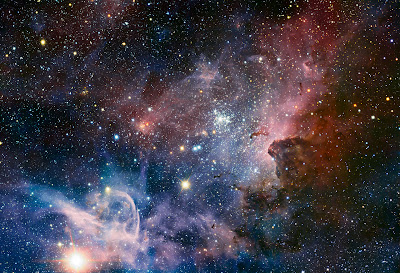
ESO ’s Very Large Telescope has delivered the most detailed infrared image of the Carina Nebula stellar nursery taken so far. Many previously hidden features, scattered across a spectacular celestial landscape of gas, dust and young stars, have emerged. This is one of the most dramatic images ever created by the VLT. Il VLT (Very Large Telescope) dell' ESO ha prodotto la più dettagliata immagine del vivaio stellare noto come Nebulosa della Carena [1] mai ottenuta nella banda infrarossa. Molte strutture prima nascosste sono state svelate su questo sfondo spettacolare di gas: giovani stelle e polvere. Questa è una delle più spettacolari immagini mai create dal VLT. Nel cuore della zona australe della Via Lattea, 7500 anni luce dalla Terra, si trova un vivaio stellare che va sotto il nome di Nebulosa della Carena. Questa nube di gas incandescente e di polvere è una delle più vicine incubatrici di stelle massicce e contiene molte delle più grandi e brillanti stelle note. Una di quest...